
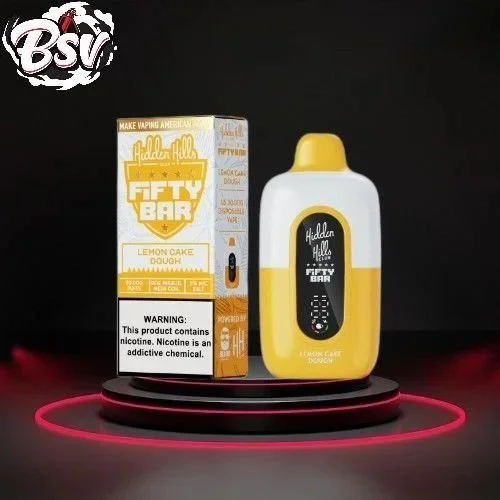
1. Lemon Cake Dough Fifty Bar Adds a New Dimension to Vape Flavor Selection
Flavor variety gives retailers another way to organize their product catalogs. The lemon cake dough fifty bar brings a bakery-inspired concept into a category that may already include fruit, mint, and beverage profiles. Lemon suggests a citrus character, while cake dough references a sweeter dessert theme. Together, these elements create a recognizable flavor identity for buyers to evaluate. Retailers should confirm the manufacturer’s description before publishing product details or making purchasing decisions. Device specifications, packaging information, and applicable compliance requirements also deserve attention. Reviewing these details helps businesses assess whether a product fits their existing assortment without relying on its name alone.
2. The Product Details Worth Checking Before Choosing a Fifty Bar
A product name provides only part of the information buyers need. Before choosing a Fifty Bar product, retailers should examine its specifications, packaging, supplier documentation, and current legal status. Battery information, device capacity, and operating instructions should match the manufacturer’s published details. Buyers should also confirm that the product is authentic and permitted for distribution in their intended market. These checks reduce uncertainty during purchasing and help prevent inaccurate product listings. Flavor descriptions deserve the same attention because similar names do not guarantee identical formulations. Keeping reliable records of these details allows retailers to compare products more consistently and make better-informed sourcing decisions.
3. Why Distinctive Flavor Profiles Matter in a Crowded Vape Market
A broad product catalog can become difficult to navigate when every item seems similar. Distinctive flavor profiles give retailers a practical way to separate products into meaningful categories. Bakery-inspired, fruit-based, mint, and beverage-style options each communicate a different flavor concept. However, adding variety should involve more than collecting products with unusual names. Retailers need accurate descriptions, verified specifications, and evidence that each item serves a genuine catalog need. Reviewing existing inventory helps identify categories that already have enough coverage. A considered selection makes product information easier to organize and gives eligible adult customers clearer distinctions when comparing legally available options.
4. Turning a Familiar Dessert Concept Into a Standout Vape Product
Familiar dessert references can make flavor descriptions easier to understand. Lemon cake, vanilla, and other bakery-inspired names connect products with recognizable culinary ideas. For retailers, the challenge is presenting these products accurately without making unsupported claims about their taste or performance. Manufacturer descriptions should guide product copy, while packaging details should support all technical statements. Consistent naming also matters across websites, inventory systems, and shelf labels. When product information matches across these channels, staff can locate items more easily and customers receive clearer details. A distinctive presentation should therefore come from accurate descriptions, organized information, and thoughtful product categorization rather than exaggerated marketing language.
5. What Sets Bakery-Inspired Vape Options Apart From Standard Flavor Lines
Bakery-inspired vape options use dessert-related flavor concepts instead of relying entirely on conventional fruit or cooling profiles. Their names may reference cakes, pastries, sweet dough, or familiar baked treats. This creates a separate category that retailers can evaluate alongside other established flavor groups. Still, the category should not be treated as a guarantee of product quality or customer demand. Each item requires individual review, including its official flavor description, device information, supplier reliability, and compliance status. Retailers can compare these details with their current assortment before deciding whether additional products are appropriate. Accurate categorization also helps prevent similar items from becoming difficult to distinguish.
6. A Smarter Way to Evaluate New Flavors for a Smoke Shop
Evaluating new flavors becomes easier when retailers use consistent purchasing criteria instead of relying on product names alone. A simple review process can help businesses compare potential additions before committing to an order.
-
Product information: Confirm the official flavor description and device specifications.
-
Supplier verification: Check documentation, authenticity, and distribution eligibility.
-
Catalog fit: Identify whether the item adds a genuinely different option.
-
Demand records: Review available sales data and customer feedback.
-
Compliance checks: Verify current legal requirements for the intended market.
These steps create a repeatable evaluation process. They also help buyers document the reasons behind purchasing decisions and avoid adding products without a clear business purpose.
7. The Role of Product Variety in Shaping a Stronger Vape Catalog
Product variety works best when each category has a clear purpose. A catalog containing fruit, mint, beverage, and bakery-inspired profiles can offer different options without relying on several nearly identical products. Retailers should assess the actual differences between items before expanding any category. Flavor descriptions, manufacturer details, and product specifications can help establish those distinctions. Existing sales records may also indicate which categories receive more attention, although past performance does not guarantee future demand. By reviewing the catalog regularly, businesses can identify unnecessary overlap and prioritize products that meet documented needs. This approach supports a more organized assortment and clearer product information.
8. From Flavor Names to Product Facts Making Better Buying Decisions
Flavor names can attract attention, but verified product facts should guide purchasing decisions. Buyers need reliable information about the manufacturer, device specifications, packaging, and distribution eligibility before evaluating a potential addition. Supplier records should also be checked for consistency and authenticity. When details are missing or contradictory, retailers should seek clarification rather than making assumptions. Accurate records make it easier to compare similar products and maintain reliable listings across sales channels. They also help staff answer questions using consistent information. A fact-based purchasing process reduces avoidable confusion and supports better coordination between ordering, receiving, catalog maintenance, and inventory review.
9. How Wholesale Buyers Can Assess Emerging Vape Flavor Preferences
Wholesale buyers need a practical way to assess changing flavor preferences without treating every new product as a guaranteed success. Sales records, retailer feedback, supplier updates, and changes in the available catalog can provide useful information. These sources should be reviewed together rather than relying on a single comment or short-term trend. Buyers can compare interest in different flavor categories and check whether potential products add meaningful variety. Supplier reliability and compliance remain essential parts of the decision. Keeping notes on product evaluations also creates a useful reference for future orders. This measured approach supports informed purchasing without making unsupported predictions about customer behavior.
10. Keeping Vape Inventory Relevant Without Repeating the Same Flavor Choices
A relevant inventory depends on regular reviews, accurate records, and sensible purchasing decisions. Effective smoke shop stock management helps retailers monitor product movement, identify duplicate flavor options, and plan orders around documented demand. Instead of adding every new release, buyers can compare proposed products with the items already available. They should also review supplier reliability, current compliance requirements, and product documentation before placing orders. Clear inventory records make it easier to identify gaps and reduce unnecessary overlap. Regular reviews can then guide future purchasing decisions as the assortment changes. The goal is a well-organized catalog built around verified information and practical business needs.